Skip to content

The $2.4 Million AI Mistake: What Most Companies Get Wrong Before They Even Start

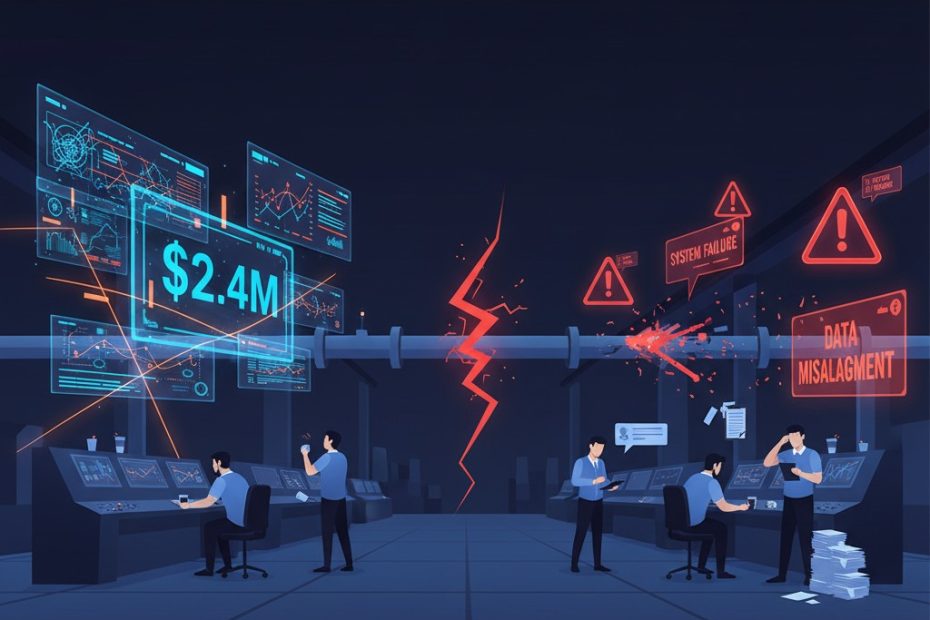
A manufacturing CEO spent $2.4 million on an AI initiative that completely failed. Six months of work, nothing worked, back to manual processes. The problem? They skipped the infrastructure assessment everyone said was “boring.” This pattern repeats across industries: companies make expensive mistakes in the same order for the same reasons. Here’s what actually separates AI success from disaster, and why foundation-first isn’t slower, skipping it is.

[Click on the image to view post]

Why Your Tech Stack Matters: Lessons from WordPress on Windows IIS

Setting up WordPress on Windows IIS taught me a crucial lesson about AI implementation: your infrastructure isn’t just a technical detail, it’s a strategic business decision. Before you invest in AI, make sure your foundation can support it. Here’s what every business leader needs to know.

[Click on the image to view post]

How AI Helped a Manufacturing Company Reduce Costs by 35%

How AI Helped a Manufacturing Company Reduce Costs by 35%

In 2025, a mid-sized manufacturing company facing rising operational expenses and razor-thin margins turned to artificial intelligence to regain control of its costs. Within twelve months, the organization achieved a 35% reduction in key cost areas by combining predictive maintenance, intelligent production planning, and data-driven quality control. What began as a targeted pilot quickly evolved into a strategic transformation of the entire factory floor.​

Instead of relying on static reports and manual interventions, the company deployed AI models to continuously monitor machine performance, forecast demand, and optimize scheduling in real time. These systems identified patterns that human teams routinely missed—such as subtle signals of impending equipment failure, recurring bottlenecks, and unnecessary energy consumption. By addressing these issues proactively, the business significantly reduced unplanned downtime, scrap rates, and overtime costs.​

This post walks through the full journey: the challenges the manufacturer was facing, the AI solutions implemented, and the specific levers that drove the 35% cost reduction. It also outlines the lessons learned and a practical framework you can apply in your own manufacturing environment—whether you are just exploring AI or ready to scale existing initiatives.

[Click on the image to view post]

Why Every Business needs an AI Strategy in 2026

Why Every Business Needs an AI Strategy in 2026

Artificial intelligence is no longer a future consideration; it’s an immediate business imperative. In 2026, companies without a clear AI strategy aren’t just missing an opportunity they’re falling behind competitors who are already leveraging AI to streamline operations, enhance customer experiences, and unlock new revenue streams.

Whether you’re in finance, healthcare, manufacturing, or retail, AI is reshaping how businesses operate at every level. From automating routine tasks and improving decision-making to personalizing customer interactions and optimizing supply chains, artificial intelligence has moved from the realm of buzzword to become a practical tool for sustainable competitive advantage.

The real question isn’t whether your business needs AI it’s whether you’re ready to implement it strategically. Companies that treat AI as a siloed technology project often struggle. Those that succeed integrate AI into their overall business strategy, aligning it with their unique goals, processes, and customer needs.

In this post, we’ll explore why a deliberate AI strategy matters now more than ever, what key elements every business AI strategy should include, and how to get started regardless of your company’s size or current technology maturity level.

[Click on the image to view the post]